The business
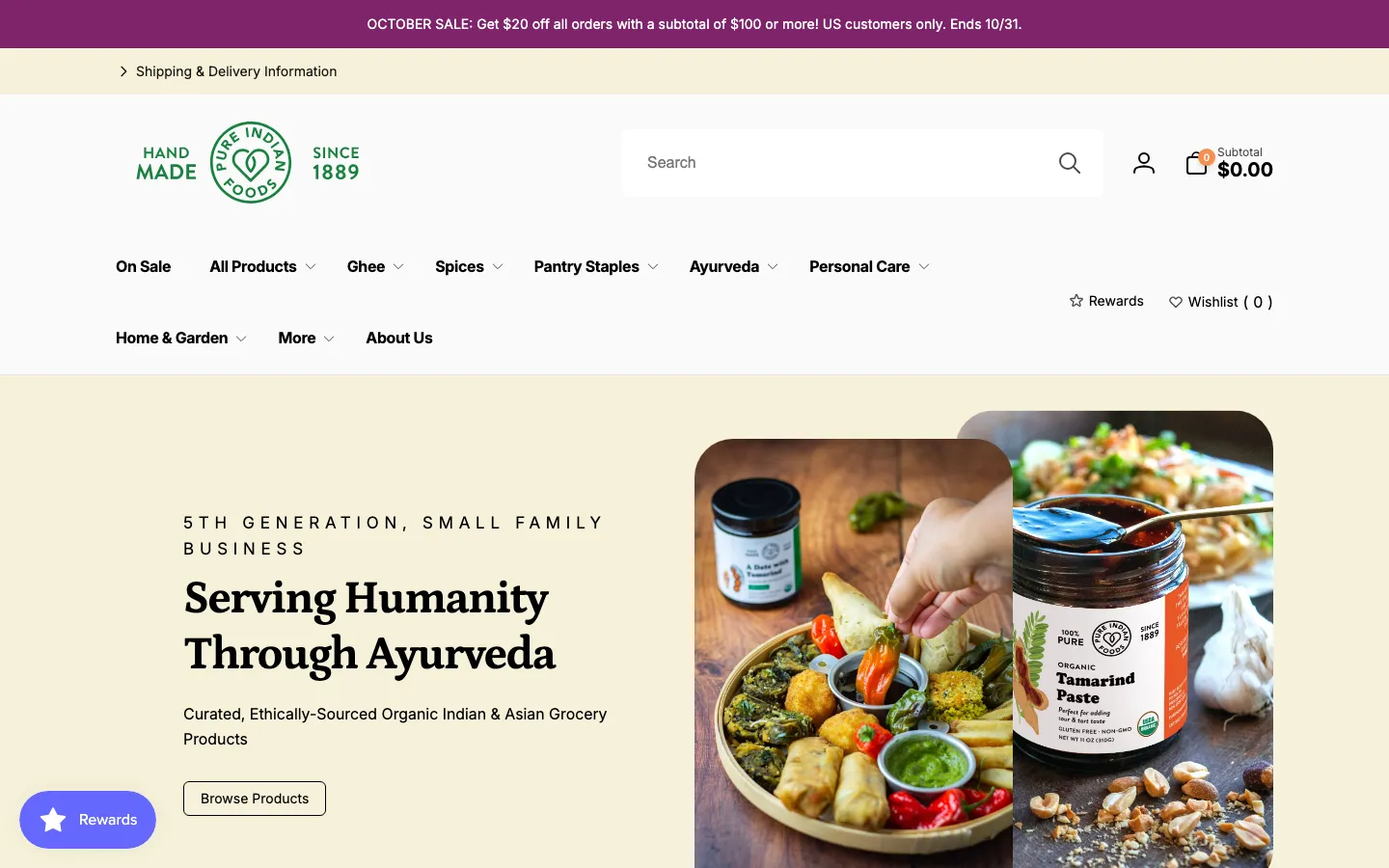
Pure Indian Foods describes itself as a curated, ethically sourced seller of organic Indian and Asian groceries, run by a fifth-generation family business. The shop lists ghee and organic spices.
What a US grocery wholesaler puts on an invoice
Food sells into two worlds. Shoppers buy a jar or two. Co-ops and independent grocers buy cases. They expect a business document.
For those buyers the invoice has to name the buyer and list each product with a SKU so the receiving dock can check the boxes against it. A purchase order number ties the invoice to the buyer's own paperwork. Net 15 or Net 30 sets the date.
Tax is the part that varies. Many states tax groceries at a lower rate than other goods, or skip the tax altogether, and the rules for packaged food differ from the rules for prepared food. A wholesale buyer who resells the goods may owe no sales tax at all. Where tax applies, it gets its own row. The seller's EIN can go in the header for buyers who keep vendor files.
How Pure Indian Foods uses PDF Invoice
Four document types are set up on the account, namely the invoice, the packing slip, the refund and the order document. The account mixes custom templates with the Professional Invoice template and a Blue Packing Slip. Wholesale (B2B) data is switched on, and so are the tax ID fields. The barcode option is on too, and the sample below prints the order number as a code under the header. Documents are in English.
Usage so far is light. This story is about the setup and why it suits a wholesale food seller. It makes no claim about outcomes.
The sample uses the Professional Invoice template with an invented seller and an invented buyer, a co-op in Chattanooga, Tennessee. It shows a purchase order number, Net 15 terms and a due date. Four SKUs follow. A $473.50 subtotal gets a Tennessee food sales tax row at 6.25% for $31.34, plus $28.00 of ground freight, for a total of $532.84. All names, numbers and addresses are made up. The tax row covers goods and freight together, so $501.50 at 6.25% gives the $31.34. Tennessee taxes freight on taxable goods and charges food at a reduced state rate plus local tax, which is what this row mimics.
Why the setup fits
A wholesale grocery order passes through several hands. The invoice says who owes what and by when. The packing slip tells the warehouse what goes in the box and leaves the prices out. The refund covers a short delivery.
With all four types on one account, each step has its own record. The B2B data adds the buyer details a wholesale customer expects to see, and the tax ID fields give both sides a place for the numbers that vendor files ask for.
What to copy
If you sell groceries to retailers, give the invoice a PO number, terms and a due date, then check the tax row against your state's grocery rules. Keep a packing slip without prices for the warehouse.