The business
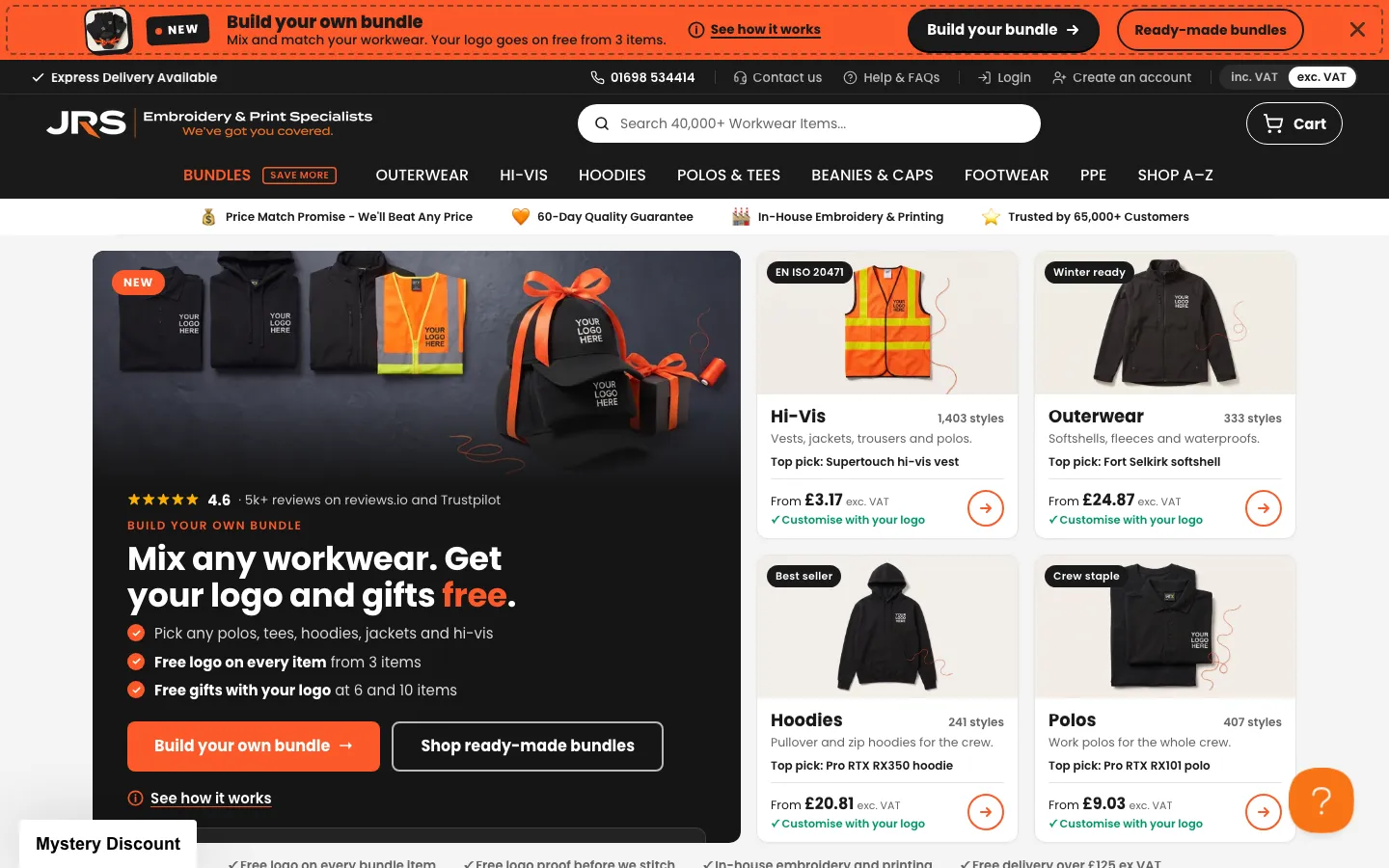
JRS Industrial Supplies sells workwear to businesses and trades from its Shopify store in the UK. The range covers hi-vis clothing, outerwear, hoodies, polos, caps, footwear and PPE, and the search bar promises more than 40,000 items. Embroidery and printing happen in-house, so a buyer can put a company logo on most of it. Ready-made bundles cover repeat orders.
One storefront detail says a lot about the customer. Prices flip between including and excluding VAT, which is how a buyer who reclaims the tax prefers to shop.
What a UK trade invoice has to carry
A UK VAT invoice follows a checklist. It shows the supplier's name, address and VAT number, a unique invoice number, the date of supply, a description of each item with quantity and unit price, the VAT rate, and totals before and after VAT. HMRC expects it within 30 days of the sale. A business customer reclaims that VAT, so an invoice that leaves out the rate or the number tends to come straight back to the supplier. Limited companies normally add their registered name and company number to business paperwork too. VAT-registered sellers keep copies for six years, and since Making Tax Digital those records have to live in digital form.
Logo work adds a step in front. Someone ordering forty hi-vis waistcoats with a stitched logo usually wants a written quote first. Then an invoice that matches it line for line. Workwear sold to businesses is standard-rated at 20%, and so is the embroidery service, which keeps the tax line simple.
How JRS uses PDF Invoice
JRS has run PDF Invoice since 2023. Its account holds five document types: invoice, order, quote, packing slip and refund. The quote template is the one built for draft orders, which fits embroidery jobs where the price depends on the artwork and the quantity. A draft order becomes the quote, and the finished order later produces the invoice.
Invoices are emailed automatically, so trade buyers get their VAT paperwork without waiting for someone in the office to find the right PDF. Documents are in English and in pounds sterling.
The sample is a quote, the layout this account uses for draft orders. The page opens with the word QUOTE, the draft order number, the date and the amount. The supplier block with the VAT number and company number sits top left under the heading, next to the billing and shipping addresses. An items table with SKU, quantity, price and subtotal follows, and Price and Subtotal both show the line total. VAT and the grand total close the page. Nothing decorative. That suits a buyer skimming for numbers.
The sample quote beside this story is built from invented names, addresses and numbers, and it shows the shape of a typical order for this kind of shop: hi-vis waistcoats, softshell jackets, hoodies and polos, plus a line for logo embroidery. The subtotal is £1,290.40, VAT at 20% adds £258.08, delivery is free and the grand total is £1,548.48. A note says a stitch proof goes out for approval before production, and the footer says the quote is valid for 14 days.
Results
The app has sent more than 79,000 documents, and each type keeps the same layout from one to the next.
Refunds get the same treatment. When a parcel comes back, the VAT on the original sale has to be adjusted, and a refund document gives the accounts team something to book it against.
The buyer on the other end sees the same supplier details, the same VAT number and the same line structure each time, which makes the paperwork quick to file.
Try it for your store
If you sell to trade customers, PDF Invoice covers quotes, invoices and packing slips from the same place. Install it from the Shopify App Store, pick a template and send your first VAT invoice.